
Cut energy bills and CO2 emissions with no upfront costs
Physical AI for electrical equipment.
Integrate any BMS, HVAC, and more
to increase your margins.
BMS reimagined:
AI energy optimisation
A wireless plug & play sensing and physical AI automation integration service.
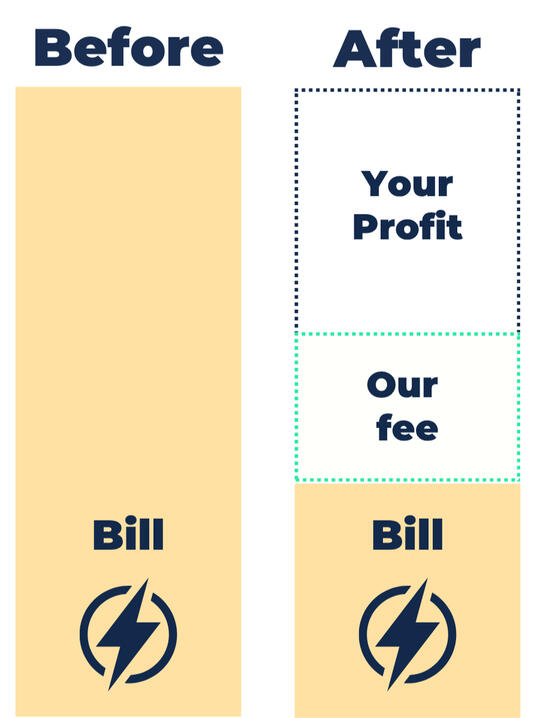
From day one, you save energy and emissions.You only pay a fraction of the savings.
VC-backed and award-winning:






.webp)

How do we save money and emissions?
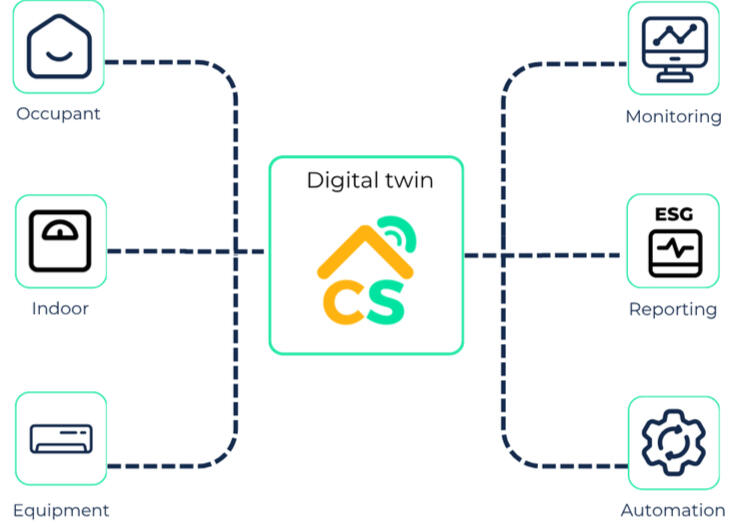
Real-time occupants, indoor, and equipment data.
A digital replica of your space to monitor parameters.
ESG reporting and automatic equipment adjustments.
Risk-free energy savings
Plug & play installation within hours, no upfront costs, and performance-based pricing.If we don’t save you money, you don’t pay.
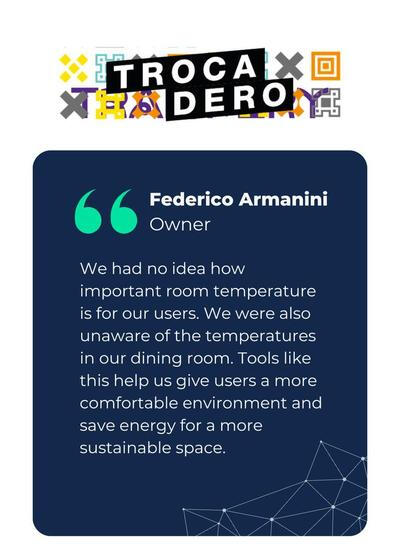
What Our Clients Say About Us

Our vision:
Physical AI automation
A world where people, buildings, and energy systems are in continuous balance with the planet.
Align people, buildings, and the grid to unlock their full potential.
Our team

15+ years innovation and multi-million projects management experience. TU Darmstadt PhD on sensors, Cambridge academic, ex United Nations.

Cambridge PhD on hardware-software. ML-at-the-edge specialist at Series A proptech. Unique integration skillset behind our architecture.

Chartered Accountant with 15+ years taking venture-backed SaaS companies from seed to Series A/B and full-stack coder.




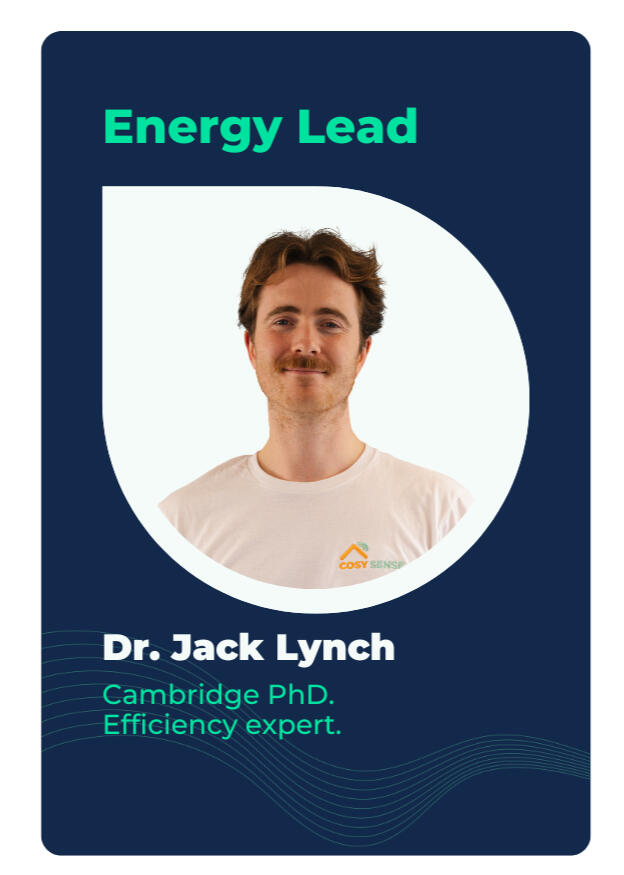
Cambridge PhD in energy demand reduction in buildings, published on occupancy-based heating decarbonisation, ex-International Energy Agency.

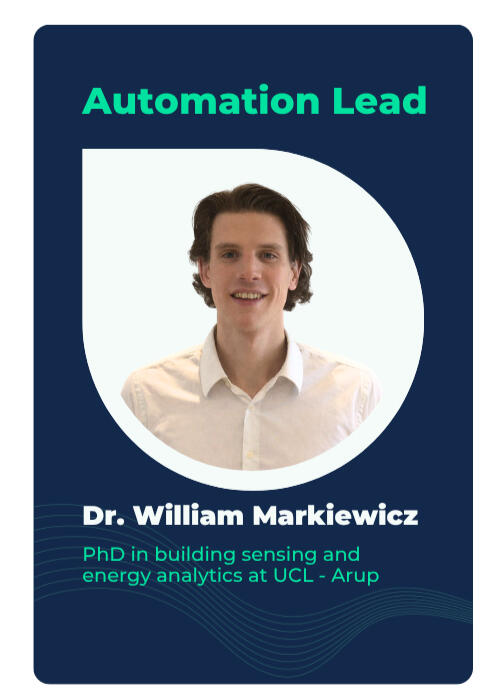
UCL PhD on building automation. Seven years delivering multi-million-pound automation programmes at GKN Aerospace. CEng.

Last year PhD on AI-driven fault detection and diagnosis at Loughborough. Ex-BAE Systems software engineer.


LSE MSc in Data Science (Distinction) after coordinating a USD 2.5M energy-efficiency and automation portfolio (including PPM) at Coca-Cola FEMSA.

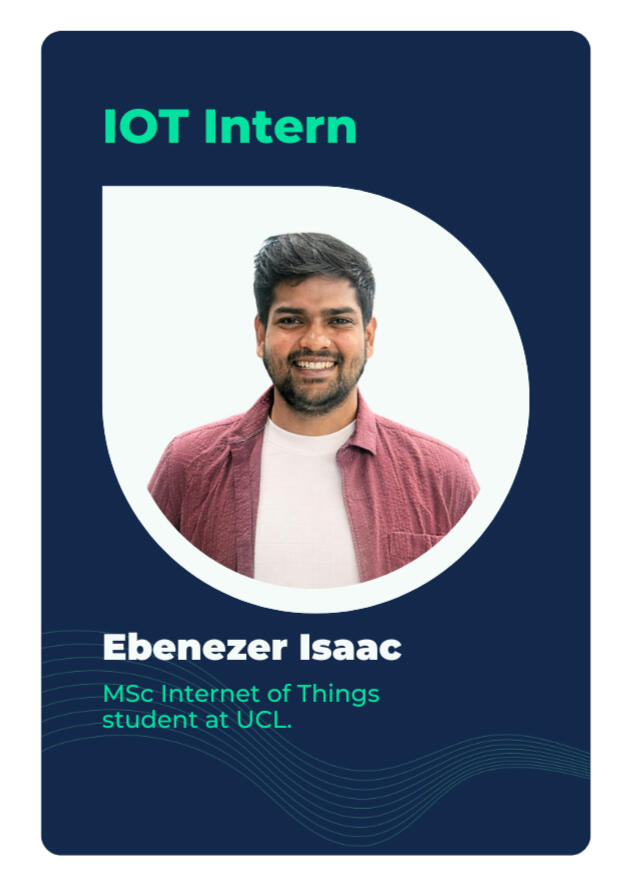
UCL MSc in IoT Systems Engineering; automated Cosysense's client onboarding backend end-to-end.

13+ years building data-rich scalable front end product R&D platforms; designed Cosysense product and dashboards.



Business Development & Innovation Consultant with 8+ years across the innovation ecosystem, scaling impact start-ups in science and emerging technology.

Scaled enterprise deployments and onboarding playboks from pre-seed to Series A at Scalestack, including pilots with NASDAQ-listed clients.

Chris is a Physics undergraduate at Imperial College London with a strong interest in climate tech and impact start-ups.



Our Mision:
Transform 1 million buildings into adaptive systems that sense, understand, and act autonomously by 2035.
Past Interns & Alumns
Msc student at Imperial College
Aijia Yang
Hugo Neely
Caoimhe Chan
Atys Panier
Tinglu Zhang
Jasmine Nugroho
Giving time back to Facility Managers
We solve the most common operational challenges in mid-market restaurants, offices, and hotels with or without BMS.
Smart savings. Perfect comfort.
Mid-size restaurants, offices, and hotels

Create healthier workspaces that boost staff comfort and performance while cutting energy costs.

Make every guest comfortable while reducing energy, cutting emissions,
and understanding demand.
Keep staff and shoppers comfortable in each area and cut energy use to reduce operating costs.
Learn how the latest AI automation in buldings works!
How does it work?
We create a private LoRaWAN network independent of your building infrastructure.
Free hardware as required to ensure your monitoring and performance goals.
We install within hours without cutting cables or making holes.
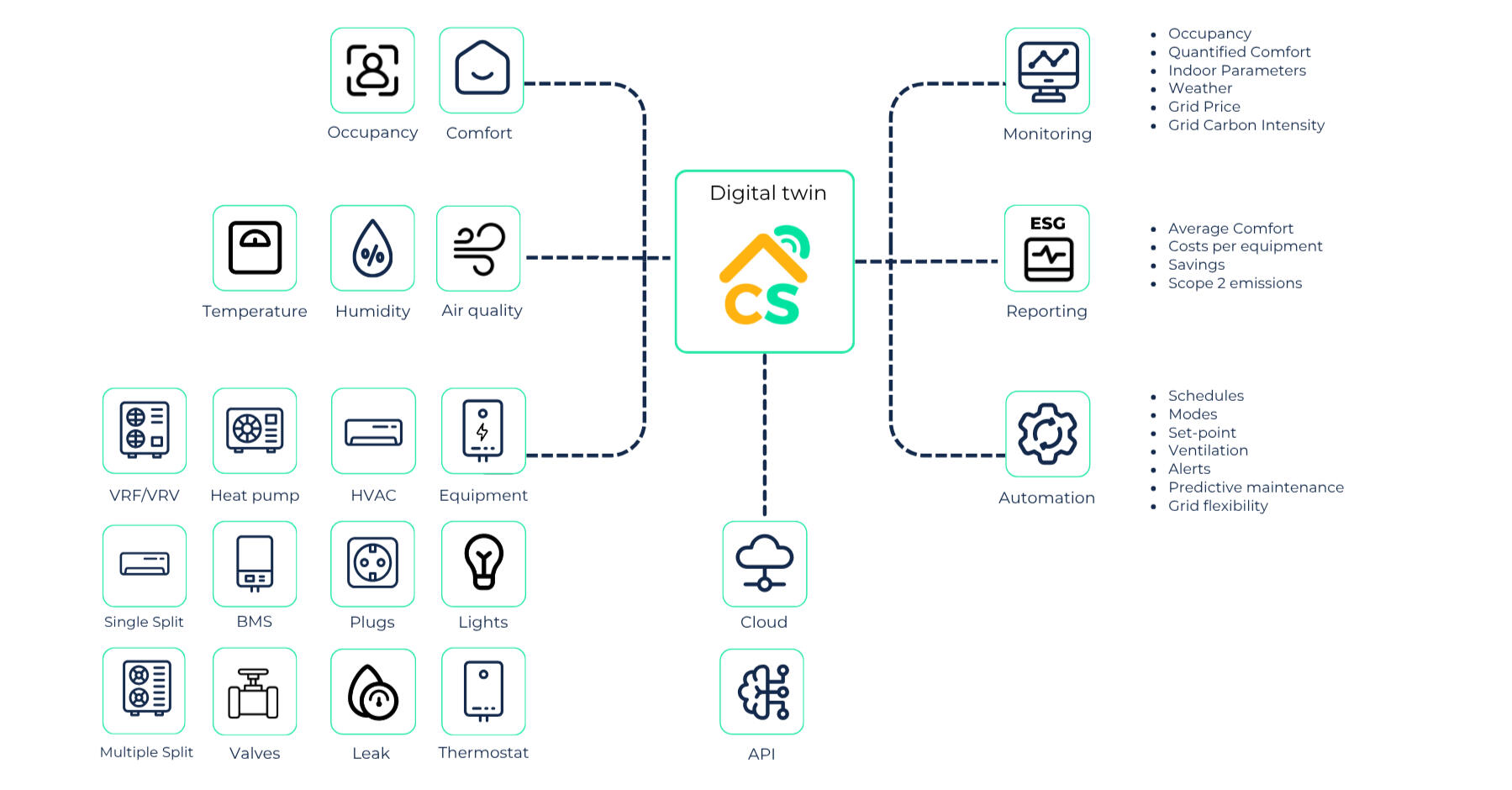
Risk-free energy savings
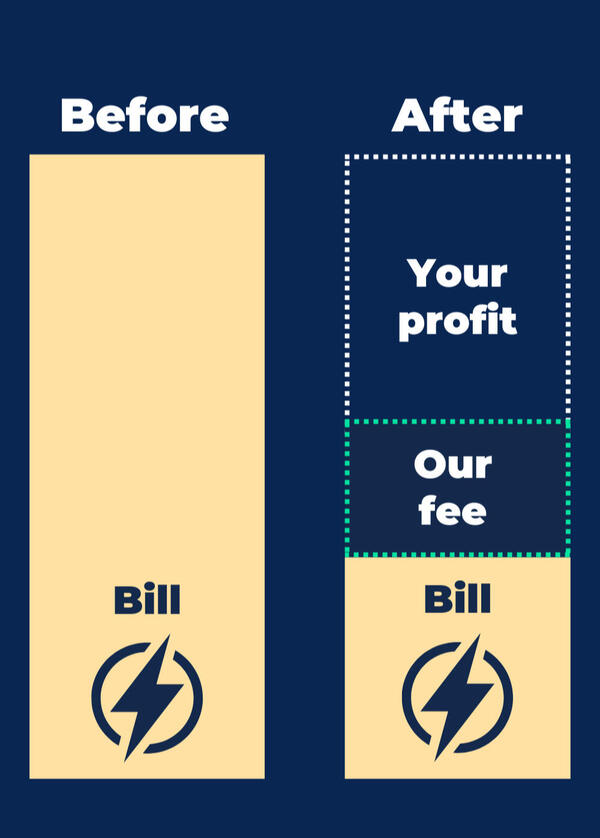
Plug & play installation within hours, no upfront costs, and performance-based pricing.If we don’t save you money, you don’t pay.
Features
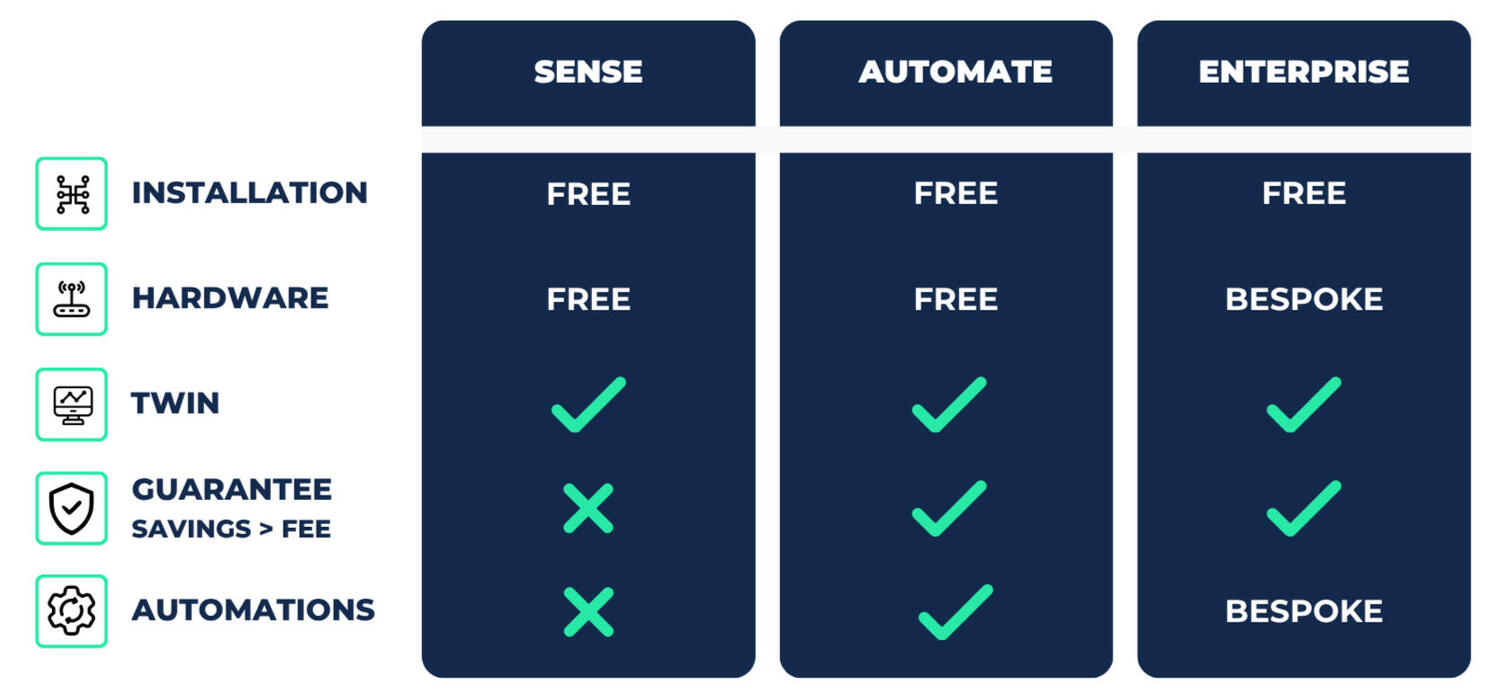
Get in touch to discuss pricing for your building
What the industry is saying
about Cosysense
Check our media coverage, awards, and news about Cosysense.
Resources
Blogs
Case studies
News
Resources
News

Resources
Blogs

Resources
Case studies
Meet CosyOS:
The First Nervous System for Buildings
We spend our whole lives in buildings, and they are broken. Think about the last heatwave. The office, the restaurant, the hotel room: all of them freezing. You complained, and nothing changed, because an operator was chasing faulty equipment they could not even find. Meanwhile, the building wasted energy and emitted carbon while the grid struggled with air conditioners and data centres. Buildings account for 30% of global energy consumption. These situations make no sense.
They come from a lack of information, digitalisation, and automation. Buildings are like old computers: under-digitised, frozen in a pre-API era, locked behind closed protocols.
Our latest innovation is a hardware-agnostic autonomous nervous system for buildings. It took two years of R&D and five PhDs to bring frontier physical AI into action. We call it CosyOS, and we gave it a voice:
Memory: CosyOS remembers how every piece of equipment actually behaves, and keeps maintenance and compliance records in order. Intelligence: it decides what should happen next. Control: it acts on its own, in real time. When it cannot act, it calls an operator by text or phone.
Installation takes less than a day, with no disruption. It plugs into any BMS-connected equipment or stranded asset. No rip-and-replace, no rewiring. It feels like installing a new operating system on a laptop, because CosyOS combines a universal knowledge graph with countless closed-protocol drivers.
The knowledge graph is how it understands a building: layout, equipment, full history. It finds compliance records and answers any question about them. We are now beta testing live calls to contractors, guiding them to the equipment that needs repair with natural speech, verifying the work and updating the records. All autonomously.
The drivers are how it acts. CosyOS already adjusts HVAC, chillers, boilers, lighting and other electrical equipment across client sites. It acts directly on stranded assets or by writing changes to BMS points. Compliance guardrails, occupant needs, and efficiency are always taken into account before any parameter changes. Legacy equipment is no barrier: specialised controllers digitalise its signals, existing sensors do the rest. If required, wireless sensors fill the gaps.
CosyOS was born to make building operations autonomous. Where there is a facility management team, it augments them. For mid-sized buildings, it becomes the first-aid digital facility manager a regional manager they never had. Our automated IPMVP module has verified 27-38% savings on HVAC across clients and we are now expanding CosyOS capabilities to the next level so it can take care of one whole building or a whole portfolio, spotting patterns no site manager could ever see alone.
Cars were manual, then automatic, and now they drive themselves. The built environment is next. CosyOS is now live to make this a reality in your building.
Cosysense: the UK deeptech startup transforming building energy efficiency and cutting CO₂ emissions
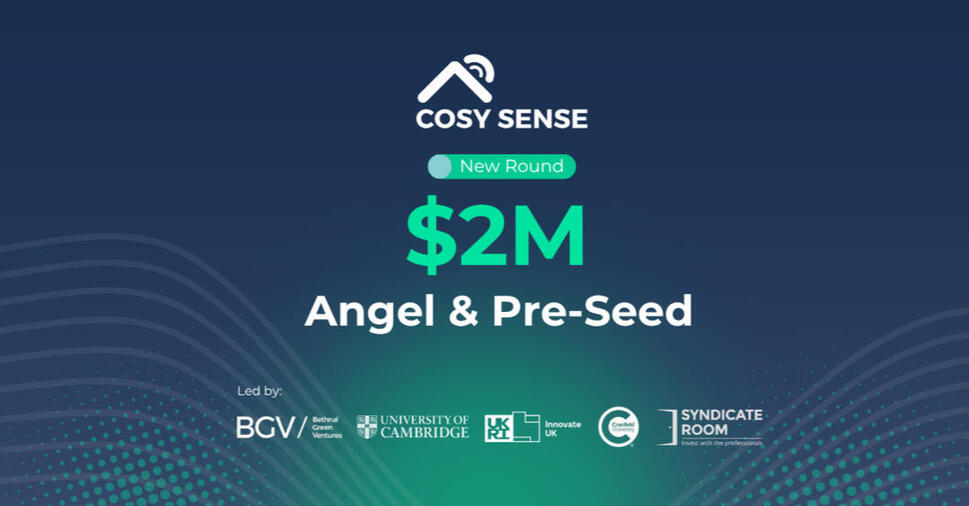
In 2025, Cosysense successfully closed a $2 (£1.5) million funding round, backed by prominent investors including Bethnal Green Ventures, Cambridge University Enterprise, Syndicate Room, and angel investors. The capital will support our R&D and scaling.
Cosysense offers a plug and play service for commercial buildings. We improve their operational performance through a patented AI control that quantifies human comfort, among other variables to automatically adjust HVAC and other electrical equipment.
There is no risk in testing our solution because clients have no upfront costs. We provide a subscription model where savings are shared.
Leadership & Team:Matias Acosta – Co-Founder & CEO, PhD from the Technical University of Darmstadt and research experience at Cambridge University and at UNDP. He led over $5M in projects, teams of over 100 people, and several knowledge transfer projects.Sebastian Horstmann – Co-founder & CTO, PhD from Cambridge University on hardware and software manufacturing. He led ML at Series A proptech, transferred his PhD to industry, and scaled a sensors project to 10+ countries.Jack Lynch – PhD from Cambridge University on AI agents for buildings' energy efficiency. He worked before at a Series A cleantech and at the International Energy Agency.
Cosysense's team brings 30+ years of experience, 70+ scientific papers, 4 patents and unique domain and entrepreneurial expertise. Stay tune to more exciting news and reach us out if you want to make commercial buildings more profitable, sustainable, and comfortable.
Energy Efficiency Is a Cost and Compliance Mandate.
Why Energy Management Systems Are Now Essential
Heating, ventilation and air conditioning (HVAC) is the largest operating expense in most commercial buildings, yet many assets still rely on outdated controls. Bill Gates has warned that cooling demand could increase tenfold by 2050. Corporate buildings face a costly scenario unless they hear PWC: energy demand is profitable now, a compliance requirement, and supports climate goals. The question is no longer whether to optimise energy use, but how quickly organisations act to protect margins and remain compliant.
The most cost-effective and scalable solution for reducing emissions from buildings is not to replace HVAC systems. It’s to make their operation smarter. That’s exactly what Energy Management Systems (EMS) do—and they’re no longer optional.
In the UK, by 2030 all leased commercial buildings must achieve at least an EPC B rating under the Minimum Energy Efficiency Standards (MEES), and TM44 inspections for HVAC efficiency are tightening. In the EU, the updated Energy Performance of Buildings Directive (EPBD) will require automation and control systems in non-residential buildings with HVAC outputs above 290kW by 2025. In short, buildings that don’t manage energy actively will no longer be legally lettable.
Yet most of the UK’s 2 million non-domestic buildings still rely on outdated or minimal controls. Many buildings already have a Building Management System (BMS), but this is not enough because their primary concern is monitoring, basic control, and integration as per ISO 16484 standard. Once they are commissioned, they are rarely re-optimised and run on fixed schedules and static setpoints. In other words, they are not responsible for optimising building operations.
An Energy Management System (EMS) focuses on data-driven automation, predictive analytics, and dynamic control to cut energy use, emissions, and costs in real time. An EMS constantly improves building performance, delivering 20-40% savings. It can support fault detection and diagnostics, and it is an integral part of a continuous improvement strategy. Where a BMS is the reactive control infrastructure, an EMS is a strategic and predictive intelligence layer.
According to ISO 52120 and the latest BCIA report, EMS systems are ranked from Class D (manual or no control) to Class A (fully automated, optimised, and interconnected). A Class A EMS includes:
Occupancy and demand-based control
Room-level automation for lighting and HVAC
Data analytics and energy reporting
Interlocks between HVAC, lighting, and blinds
Cloud-based access, optimisation, and remote diagnostics
Predictive maintenance and demand-side response readiness
Compared to technologies like heat pumps or solar PV, Class A EMS offers superior carbon reduction potential per pound invested—cutting emissions at just £224/tonne of CO₂.Many traditional EMS products on the market today only meet basic or Class C requirements, typically offering:
Setpoint control
Simple scheduling
Electricity and gas metering
Remote access dashboards
These features are helpful—but insufficient for compliance, let alone deep decarbonisation. In contrast, advanced EMS platforms like Cosysense, can exceed Class A performance while delivering far more value.
Cosysense is the first EMS to combine Class A automation with human-centric analytics with early fault detection. While most systems respond to presence, we go further—monitoring comfort and air quality levels combined with usage patterns. Moreover, Cosysense keeps on extending its features and has a very exciting tech roadmap ahead. This matters because it unlocks deeper energy savings with better user experience:
Less overheating and overcooling: saving more energy due to personalised operations
Fewer complaints
Enhanced air quality and thermal comfort
Improved productivity and health outcomes
For asset owners and occupiers, that means lower operating costs, better compliance scores, and more satisfied tenants. A building that doesn’t comply with MEES, TM44, or EPC B won’t be lettable. And a building that isn’t smart enough to adapt to climate change will be expensive to operate. EMS is no longer a nice-to-have. It’s an essential infrastructure required for compliance. Reach out to us, take the first step toward transforming your building operations today.
Zoning explained: Cosysense value beyond it
Zoning boosts heating, ventilation, and cooling systems (HVACs) efficiency. It's not a new trick, but it sure cuts down on your bills and gives you more control over your indoor climate. Discover why zoning matters and when it's best to use it. Moreover, we'll show how Cosysense ramps up your HVAC's efficiency, with or without zoning.
Zoning is important for multi-level buildings, spaces with high ceilings or multiple windows with uneven sun exposure. You should consider zoning if you consistently find that the temperature in your space varies greatly or if you constantly have unoccupied areas. Smart Zoning brings the traditional concept to a new era. A control board is responsible for synchronising smart thermostats that define indoor conditions in each zone. They use dampers to control the airflow throughout the building’s ductwork (i.e., tubes that distribute the air). Smart venting works similarly but uses different software and hardware. It also creates zones, but instead of using dampers inside ducts, the airflow is controlled by supply vents. The advantage of smart vents is that they typically reduce installation costs and time, and no changes in the existing ductwork are typically required.Although smart zoning and venting boost efficiency, you should also consider their potential disadvantages. Your HVAC needs to be dual-stage or modulating for zoning, or you may need a new one. HomeAdvisor says you are looking at ~$3,000 for mini-splits and up to $7,000 for more complex HVACs. Even if you have the right HVAC, the upfront cost of smart zoning or venting is between $1,700 and $4,500 without considering the new HVAC components you may need. In addition, your ductwork size, configuration, and connections should allow optimal airflow variation. Otherwise, you may be facing considerably high retrofit costs. According to the US Department of Energy, HVAC zoning/venting can reduce by 30% energy costs and take over 5 years to pay itself, depending on the increased complexity and costs of the HVAC maintenance.How is Cosysense different?
With smart zoning or vents, occupants can control the temperature in each zone better. This saves energy, but it does not assure occupants’ comfort. We all have different comfort levels, and finding that sweet comfort spot in communal spaces is hard. Think about your office: How often have you participated in or witnessed a fight over an HVAC remote control in the workplace? The result is that common spaces are typically overcooled or overheated, wasting energy owing to discomfort.
Cosysense is a simple add-on for comfort and energy savings with no installation costs. We differ from zoning or smart venting because we optimise comfort in communal spaces to generate energy savings. Our system works in each zone independently and can be coupled with smart zoning, smart vents, central air conditioning, heat pump or ductless systems. We can also install our system in single spaces, so there is no need for complex HVACs for our solution to work. Moreover, our human-centred efficiency solution quantifies your scope 2 emissions. Do you want to test it? Cosysense is free to install and will only cost you a fraction of your savings.
Cutting costs and emissions:
A dive into HVAC efficiency
Heating, ventilation, and air conditioning systems (HVACs) account for 38 to 40% of electricity consumption in office buildings, representing 70% of base building landlord costs. With increasing electricity prices and greenhouse emissions regulations, HVAC energy efficiency matters more than ever for commercial buildings. What can you do about it?HVACs' most important function is to promote indoor comfort and well-being. Many businesses use smart thermostats like Nest, Ecobee, and Pelican to control and manage HVACs more efficiently. These thermostats adjust your HVAC’s temperature by learning about your behaviours, preferences, weather data, and your space’s characteristics. They also adapt temperature settings when there are no occupants and can optimise compressor and ventilation settings to minimise power consumption. They can also provide reminders to change filters and integrate them into other smart systems.The issue with smart thermostats is that they are limited to certain types of HVACs, require WiFi, and often need a retrofit for installation quote. In addition, they were developed to cater for homes with few occupants. This means they estimate comfort rather than quantify it.
Occupants too hot or too cold due to wrongly set HVACs in the workplace affect more than half of the US and UK occupants. It leads to an astonishing 2% to 15% energy waste per degree of discomfort energy waste per degree of discomfort, reduced productivity, and increased complaint rates.Cosysense is unique because we monitor occupants' comfort (among other variables) to leverage the latest AI for HVAC energy efficiency. Thanks to our solution, comfort goes hand in hand with efficiency. We are also different because our solution has no upfront cost. We are committed to reducing your consumption, so we only charge a fraction of your realised savings.The critical role of HVACs on buildings’ comfort and well-being will only increase due to extreme weather conditions caused by climate change. They are the largest source of energy consumption and emissions of buildings, so every efficiency effort matters. We can support you in transforming your space into a more efficient, sustainable and comfortable venue without any hassles, changes to your existing systems or cost. Shall we have a call to talk more about it?
Chill out, but not too much:
health impacts of air conditioning
Have you ever felt sick after spending time in an air-conditioned space? Have you blamed the air conditioner for your sickness? You are not alone. ACs are key for a healthy and cosy indoor environment, but overcooling impacts our health and well-being. Here is how.Maintaining a comfortable temperature and the right humidity is key for promoting a healthy environment in offices and other indoor spaces. Low temperatures can reduce the growth of bacteria and other potential allergens. However, we are we are overcooling shared spaces. Exposure to cold air for extended periods can lead to breathing discomfort due to irritation and inflammation of the airways. The respiratory system constricts, making individuals more prone to respiratory infections and can provoke asthma in susceptible individuals.
The right humidity levels also matter for a healthy environment. Mould forms at a relative humidity of more than 70% and once it forms, it costs a lot of money to retrofit buildings to remove it. Mould can lead to allergic reactions such as sneezing, running nose, red eyes and skin rash. It can also cause asthma attacks. Air conditioning systems deplete humidity levels in indoor environments, leading to dry air which is needed to avoid mold formation. However, overusing the AC means the air is dehumidified to an extent that can cause skin dryness, itching, and irritation. As with temperature, balance is critical to keep humidity at healthy levels between 40% and 60%.Indoor life without air conditioning is unimaginable. With climate change and rising heat waves, we will only depend more on ACs for healthy and cosy indoors. The key is to find the right balance on how to use it, which needs monitoring technology. That is why Cosysense exists. We are creating smart, healthy, and comfortable commercial spaces for everyone, which also brings a reduced carbon footprint. We use state-of-the-art sensors and artificial intelligence technology to make it happen. Would you like to learn more about our technology? Reach out. You can test our technology for free and keep it by paying only a fraction of your monthly energy savings.
Thermal inequality: millions of women and our planet suffer from it every day
How often have you been freezing in an overly air-conditioned office during summer or boiling during winter? If your answer is 'countless', then you're not alone. Most females and other temperature-sensitive individuals depending on age, metabolic rate, and ethnicity, suffer from thermal discomfort. This is likely the largest gender inequality you have never heard of. Addressing this issue is crucial for creating more inclusive commercial buildings, boosting company productivity, and promoting sustainability.The uncomfortable reality is that 4 to 8 out of ten people today suffer from thermal discomfort. An occupant survey conducted in over 400 offices revealed that overcooling was 1.8 times more likely to affect women than men, which is aligned to complaints about cold offices shared more often by women on social media.
Two main approaches determine AC settings. The first relies on international standards or government recommendations designed primarily with male comfort parameters in mind. These standards often overestimate women's metabolic rates, incorrectly assuming that women will be comfortable at lower temperatures than is actually the case. The second approach depends on the individual manager's temperature preference, with AC settings based on personal comfort. Considering that most leadership positions today are occupied by men, gender thermal discrimination is perpetuated.Thermal discomfort significantly impacts companies’ productivity. For instance, a 10-degree temperature change decreases women's scores in verbal and math tests by 27%. Addressing gender thermal discomfort is also crucial for sustainability. Air conditioning will contribute to 18% of greenhouse gas emissions by 2050. Every degree of overcooling or overheating means an excess energy consumption of 2 to 15%, leading to increased emissions. Hence, adjusting the AC settings to cater to all genders can significantly reduce energy usage and greenhouse emissions.Gender thermal discomfort is a prevalent issue with far-reaching implications. It not only perpetuates gender bias but also impacts productivity and pollutes. Addressing this issue calls for re-evaluating existing standards and new user-centred solutions that consider all genders for determining wellbeing. Indeed, this is exactly what we do in Cosysense because we care about all genders’ wellbeing and the environment. With our smart sensors and AI technology, commercial buildings become more inclusive for everyone. They improve people’s productivity, cut energy bills and reduce their emissions. It is time for comfort to meet sustainability.
Cosysense: making shared spaces
pleasant and energy efficient
Who hasn't lived or seen the typical arguments over cold or hot offices? We all know it. For buildings, discomfort means up to 15% excess energy consumption and greenhouse gas emissions for each degree outside optimal heating or cooling systems. The boom in heating, ventilation, and air conditioning (HVAC) will result in 18% of global greenhouse emissions by 2050. The changing climate is accelerating this trend at the moment with a boom of installations in workplace, retail, and hospitality buildings. Are we making good use of AC that justifies paying high electricity bills and greenhouse gas emissions? The answer is no.Most shared spaces set a constant AC temperature of 18 or 21 ºC regardless of who is inside, the outside weather, or the current electricity rate. Interestingly, we found that over 54% of people in shared spaces freeze. You might have been feeling cold yourself sometimes. Check #coldoffice on X or TikTok to learn about the magnitude of this problem.
Our approach to HVAC is revolutionary. We prioritise comfort and health in communal spaces of commercial buildings to enhance people's well-being and productivity. Our plug-and-play sensors collect user comfort data, indoor environment, and HVAC power that we transform into real-time CO2e emissions. Our AI model uses the data for dynamic comfort and energy optimisation. By making occupants comfortable, we cut 15% to 30% of electricity costs and emissions for buildings. For example, in a London coworking space, we generated 897kWh savings (~£296 and 201kgCO2e) for one HVAC in 30 days. We are a cleantech company, so we align our revenue with our promise. Clients have zero installation costs. They subscribe to our solution with a guarantee: they only pay if we generate larger savings than our fee.We are the first human-centred energy efficiency company in the world. We will transform 1 million buildings by making people comfortable, cutting the equivalent greenhouse gas emissions as if we were creating a new forest as big as London every single once reaching scale. Would you like to make your shared space more pleasant and energy-efficient? Let's chat!
Cosysense Privacy Notice
1. INTRODUCTION
This privacy notice explains how Cosysense Ltd ("Cosysense", "we", "us" or "our") collects and uses your personal data.
In this notice, "processing" means the collection, recording, storage, use, disclosure and any other operation or dealing with personal data carried out by us.This privacy notice was last updated on 12/08/2026. We may update it from time to time, for example to reflect changes in legislation, new technologies or developments in our services. Please check our website periodically for the most up-to-date version.
2. ABOUT US
Cosysense is a technology company based in London, United Kingdom. We provide an AI-driven operational layer for commercial buildings: we retrofit adaptive control systems into existing buildings to autonomously optimise electrical equipment among which we have a strong focus on heating, ventilation, air conditioning (HVAC) and energy use for occupants, the electricity grid and the environment (our "services"). Our customers are businesses, such as multi-site restaurant, hospitality, and commercial property operators.In order to provide our services, to manage our relationships with customers, suppliers and partners, to recruit, and to generally run our business, we need to process personal data. When we do so, we act as a controller of that personal data, which means we are responsible for processing it in compliance with UK data protection laws: the UK GDPR and the Data Protection Act 2018 (together, the "Data Protection Legislation").We act as a controller when we collect personal data belonging to: visitors to our website; prospective customers; individuals who work for our customers, suppliers and business partners; job candidates; and individual contacts we engage with in the course of business.Cosysense Ltd is registered in England and Wales under company number Cosysense Ltd, with its registered office at 5 Brayford Square, E1 0SG London. We are registered with the Information Commissioner's Office (ICO) under registration number C2007325.Building occupants: where our systems process data collected by sensors installed in our customers' buildings (see section 7), we generally act as a processor on behalf of the relevant building operator, who remains the controller of any personal data involved. If you are an occupant or visitor of a building where our technology is deployed, and you have questions about how your data is handled, please contact the building operator in the first instance, or contact us using the details in section 14, and we will direct your query appropriately.If you are unsure whether we act as a controller of your personal data, please contact us at any time using the details in the "Contacting us" section (section 14).
3. ABOUT OUR SERVICES AND THE DATA THEY USE
Our services work primarily with building and equipment data rather than personal data. To optimise a building, we collect telemetry from Internet of Things (IoT) sensors and controllers that we install, and from existing building systems (such as building management systems, HVAC units, electrical equipment, and energy meters). This includes measurements such as temperature, humidity, CO2 levels, energy consumption and equipment status, together with contextual data such as weather, tariffs, and grid signals.Some of this data may constitute or contain personal data in limited circumstances. For example, aggregate occupancy or presence signals used to adapt comfort settings, comfort feedback, and anonymous sex or gender estimations. We design our systems to use anonymised or aggregated data wherever possible, and we do not use image processing through cameras, audio recording or technologies that identify individual occupants as part of our standard service.
4. WHAT PERSONAL DATA DO WE COLLECT ABOUT YOU?
4.1. Overview
Personal data is any information from which you can be directly or indirectly identified. The personal data we collect about you will vary depending on your relationship with us (for example, website visitor, prospective customer, customer or partner contact, building occupant, job candidate, or supplier).Certain categories of personal data require special protection under the Data Protection Legislation and are known as "special category data" (information about health, genetic or biometric data, criminal convictions, sex life or sexual orientation, racial or ethnic origin, political opinions, religious or philosophical beliefs, or trade union membership). We do not routinely collect special category data in the course of our business, and we will only process it where the Data Protection Legislation permits us to do so (for example, in a recruitment context with your explicit consent, or where necessary in connection with legal claims).If you provide us with personal data relating to other individuals (for example, colleagues you nominate as contacts), please make sure they are aware of this privacy notice.The sections below describe the personal data we are likely to collect depending on your relationship with us.
4.2. Website visitors and prospective customers
This section applies if you visit our website, request information about our services, register for our communications or events, or engage with us as a prospective customer.a) What personal data do we collect about you?
- name and job title;
- business contact details, including email address, telephone number and organisation;
- information about your organisation and its buildings that you share with us when requesting a proposal or assessment (for example, site locations, equipment and energy data);
- information obtained through our use of cookies and similar technologies, such as IP address, device identifiers and analytics data (please see our cookie policy for more information);
- information captured during correspondence with you, such as emails, telephone calls, video meetings and web forms;
- and information about your marketing preferences.b) How will we collect personal data?
Most personal data is collected directly from you: when you contact us, complete a form on our website, register for information or events, or interact with us at meetings and industry events. We may also collect personal data from: your colleagues; publicly available sources such as your organisation's website or LinkedIn; and third parties who introduce or refer you to us.c) What will we use your personal data for?
The Data Protection Legislation requires us to have a "lawful basis" to collect and use personal data. We rely on the following lawful bases: it is necessary to take steps at your request prior to entering into a contract; it is necessary to comply with our legal or regulatory obligations; it is necessary for legitimate business interests pursued by us or a third party, where your interests and fundamental rights do not override those interests; and/or, in limited circumstances, you have given consent (for example, for certain marketing).
| Purpose for processing | Legal basis |
|---|---|
| To respond to your enquiries, prepare proposals, quotes and assessments, and take steps to enter into a contract. | Necessary to take pre-contractual steps at your request; legitimate business interest (to develop our business). |
| To carry out marketing and to track engagement and improve our website and communications. | Consent; legitimate business interest (to promote our services and improve customer experience). |
| For internal business management purposes such as audit, security, accounting and obtaining legal or professional advice. | Legitimate business interest (to run our business effectively); legal or regulatory obligation. |
| To comply with our legal or regulatory obligations. | Legal or regulatory obligation. |
d) Who will we share your personal data with?
- our third-party service providers who support the operation of our business, such as IT, cloud hosting, CRM, communications, marketing, document management and information security providers;
- our professional advisers, including solicitors, accountants and insurers;
- regulators and law enforcement agencies, including the UK Information Commissioner's Office, where required;
- any person to whom we may assign or transfer our rights and obligations as a result of a restructuring, reorganisation, merger, sale or acquisition, together with their legal and technical advisers.
4.3. Customer, supplier and business partner contacts
This section applies if you work for, or represent, one of our customers, suppliers, subcontractors, installers, distributors, referral partners or other organisations we do business with.a) What personal data do we collect about you?
name, job title and role;
business contact details, including address, telephone numbers and email address;
financial information where relevant, such as bank details for making or receiving payments;
information about your employment, organisation and work industry;
information collected as a result of our onboarding, procurement or due diligence checks (see section 6);
information relating to the performance of our contract, such as site access details, project records, support tickets and training records; and
information captured during correspondence with you, such as telephone calls, video meetings, emails and other written correspondence.b) How will we collect personal data?
Directly from you; from your employer or the organisation you represent; from referees or introducers; and from publicly available sources such as Companies House or your organisation's website.c) What will we use your personal data for?
| Purpose for processing | Legal basis |
|---|---|
| To engage and onboard customers, suppliers and partners, deliver our services and fulfil our contractual obligations. | Necessary to perform our contract; legitimate business interest (to run and grow our business). |
| To install, operate, maintain and support our systems at customer sites, including coordinating site access. | Necessary to perform our contract; legitimate business interest (to deliver our services safely and effectively). |
| To make and receive payments and manage accounts. | Necessary to perform our contract; legal or regulatory obligation. |
| For internal business management purposes such as audit, security, accounting and obtaining legal or professional advice. | Legitimate business interest; legal or regulatory obligation. |
| To comply with our legal or regulatory obligations. | Legal or regulatory obligation. |
| For purposes related to a merger, acquisition, investment, sale or restructure. | Legitimate business interest. |
| To communicate with you and assist with any complaints or queries. | Necessary to perform our contract; legitimate business interest; legal or regulatory obligation. |
4.4. Building occupants and visitors
This section applies if you occupy, work in or visit a building where our technology is deployed.Our systems are designed to optimise buildings, not to monitor people. The data our sensors collect is environmental and operational (for example, temperature, humidity, CO2, energy use and equipment status). Where occupancy or presence signals are used, these are aggregate measures (such as whether a space is occupied or how many people are present) and do not identify individuals. We do not use cameras, audio recording, or biometric or location-tracking technologies as part of our standard service.To the extent any of this data constitutes personal data, the building operator (our customer) is the controller and we process it on their behalf under a data processing agreement. Occasionally, individual feedback on comfort (for example, a request to adjust the temperature) may be shared with us by the building operator; we use this solely to deliver the service. For questions about data collected in a specific building, please contact the building operator, or contact us using the details in section 14 and we will direct your query.
4.5. Candidates applying to work at Cosysense
This section applies to current and former candidates for roles with us. Please also show this privacy notice to anyone else whose details you provide to us, such as referees or emergency contacts.a) What personal data do we collect about you?
name, date of birth and contact details, including address, telephone numbers and email address;
identity and right-to-work documents (such as passport, visa or driving licence);
employment data, such as skills and experience, qualifications, training, professional memberships, references and employment history;
information relevant to the recruitment process, such as your CV or cover letter, interview notes, assessments and any other information you share with us;
where an offer is made: bank account details, National Insurance number, salary, pension and benefits information.b) What special category data do we collect about you?
We do not routinely collect special category data about candidates. We may process limited health information where needed to make reasonable adjustments during recruitment, or diversity information you volunteer, in each case with your explicit consent or as otherwise permitted by law.c) How will we collect personal data?
Directly from you during the application and interview process; from correspondence with you on LinkedIn or other professional platforms; from recruitment and employment agencies; from your referees; and, where relevant to the role and permitted by law, from background check providers.d) What will we use your personal data for?
| Purpose for processing | Legal basis |
|---|---|
| For the recruitment process, including considering your suitability for the role, conducting interviews, determining terms, record-keeping and correspondence with you. | Necessary to take steps to enter into a contract with you; legitimate business interest (to undertake recruitment). Special category data: explicit consent. |
| To verify your identity and right to work in the UK. | Legal obligation. |
| For internal business management purposes such as audit, security and obtaining legal or professional advice. | Legitimate business interest; legal or regulatory obligation. |
e) Who will we share your personal data with?
- recruiters, former employers and your referees;
- background check providers, where relevant to the role;
- our third-party service providers, such as IT, HR software and document management providers;
- regulators and law enforcement agencies where required;
- and any person involved in a restructuring, merger, sale, investment or acquisition of our business, together with their advisers.
5. USING YOUR PERSONAL DATA FOR MARKETING
5.1. From time to time, we may send you marketing about our services by email, telephone, post and through digital channels such as social media and professional networks, where we think it will be of interest to you or where you have asked us to. For this, we may use cookies and similar technologies, which you can read about in our cookie policy.5.2. If you wish to unsubscribe from marketing emails, you may do so at any time by following the unsubscribe link in our marketing emails, or by contacting us at [PRIVACY EMAIL].
6. BUSINESS DUE DILIGENCE AND FINANCIAL CHECKS
6.1. As part of onboarding customers, suppliers and partners, we may carry out due diligence checks, which can involve processing limited personal data about individuals connected to those organisations (such as directors and beneficial owners). These checks may include verifying identity, company ownership and creditworthiness, and screening against applicable sanctions lists.6.2. For these purposes we may obtain information from publicly available sources (such as Companies House), credit reference agencies and sanctions screening providers. Where we use such providers, they may process your personal data in accordance with their own privacy notices.6.3. We may also use personal data to detect and prevent fraud and financial crime, and to verify identity, where we have a legal obligation or a legitimate interest in doing so. If fraud or financial crime is detected or suspected, we may decline to enter into or continue a business relationship and may share relevant information with law enforcement agencies.
7. BUILDING SYSTEMS, SENSORS AND CONNECTED EQUIPMENT
7.1. Our services involve installing and connecting to equipment in our customers' buildings, including IoT sensors, controllers and gateways, and integrating with existing building management systems, HVAC equipment and energy meters.7.2. The data generated by these systems is operational and environmental in nature. Set out below are the main types of data our systems process:
a) environmental measurements such as temperature, humidity and CO2 levels;
b) aggregate occupancy, sex/gender estimations, presence, comfort estimations and feedback, among other anonymous signals used to adapt settings;
c) energy consumption and generation data from meters and equipment;
d) equipment status, settings, runtime and fault data;
e) external contextual data such as weather forecasts, energy tariffs and grid signals; and
f) service records, such as control decisions taken by our system and their measured effects.7.3. This data is used to operate, monitor and improve the optimisation service, to verify energy savings, and to develop and improve our models and technology. Wherever this data could relate to individuals, we anonymise or aggregate it so that no individual can be identified, or, where that is not possible, we process it as a processor on behalf of the building operator under a data processing agreement.
8. AUTOMATED DECISIONS AND PROFILING
8.1. Our technology makes automated decisions about buildings and equipment — for example, adjusting HVAC setpoints and schedules — not about individuals. These decisions are based on environmental, operational and contextual data as described in section 7.8.2. We do not make decisions based solely on automated processing that produce legal or similarly significant effects for individuals. If this ever changes, we will update this notice and ensure appropriate safeguards are in place, including the right to obtain human intervention, to express your point of view and to contest the decision.
9. DATA TRANSFERS
9.1. The personal data we collect may be transferred to and processed in a destination outside the UK and the European Economic Area ("EEA"), for example where we use cloud hosting or software providers that operate internationally, or where we engage with customers, partners or team members located abroad (including in Latin America).9.2. Where personal data is transferred outside the UK and EEA, we take steps to ensure it is adequately protected and processed in compliance with the Data Protection Legislation, such as:
- transferring personal data to a country or jurisdiction that has been deemed "adequate" by the UK government;
- entering into the UK Addendum to the EU Standard Contractual Clauses or the UK's International Data Transfer Agreement with the recipient; or
- relying on the recipient's certification under the UK–US Data Bridge extension to the EU–US Data Privacy Framework, where applicable.9.3. To find out more about how your personal data is protected when transferred outside the UK and EEA (or to obtain a copy of the applicable safeguards), please contact us using the details in section 14.
10. HOW DO WE PROTECT YOUR INFORMATION?
We take the protection of your personal data seriously. We implement a range of technical, physical and organisational measures to keep personal data confidential and secure, including:
- access controls so that personal data is restricted to those who need it for the purposes set out in this notice;
- internal data protection and information security policies governing the use, storage and processing of personal data;
- encryption in transit and at rest, firewalls and password protections, including for data transmitted from devices installed in buildings; and
- regular data protection and security training for our team.Where we have provided you with, or you have created, credentials to access any of our systems or dashboards, you are responsible for keeping them safe and confidential.
11. HOW LONG DO WE RETAIN YOUR INFORMATION FOR?
11.1. We only keep your personal data for as long as is necessary to fulfil the purposes set out in this notice and to comply with our legal, regulatory, accounting and contractual obligations.11.2. The retention period will depend on your relationship with us and the type of personal data. For example, records relating to a contract will generally be retained for the duration of the contract and for a period afterwards consistent with limitation periods; unsuccessful candidate records are retained for a shorter period following the conclusion of recruitment.11.3. If you have any questions about retention, please contact us using the details in section 14.
12. YOUR RIGHTS
12.1. It is important that any personal data we hold about you is accurate and up to date. Please keep us informed if your personal data changes.12.2. The Data Protection Legislation gives you a number of rights, which you can exercise at any time by contacting us using the details in section 14:
- the right to access your personal data: you are entitled to a copy of the personal data we hold about you and certain details of how we use it;
- the right to rectification: you can ask us to correct information that is out of date, incorrect or incomplete;
- the right to restrict processing: in certain circumstances, you can ask us to stop using your personal data, for example where you think it is inaccurate or no longer needed;
- the right to erasure: you can ask us to erase your personal data in certain circumstances, although this must be balanced against other factors, such as legal obligations that require us to retain it;
- the right to data portability: in certain circumstances, you can ask us to transfer personal data you have provided to us to a third party of your choice;
- the right to object to marketing: you can ask us to stop sending you marketing at any time;
- the right to object to processing: where we process your personal data based on our legitimate interests, you can object, and we will consider whether our interests are overridden by your rights;
- the right to withdraw consent: where we rely on your consent, you can withdraw it at any time;
- rights related to automated decision-making: you can ask us to review any solely automated decision that significantly affects you (see section 8);
- and the right to lodge a complaint with the Information Commissioner's Office (https://ico.org.uk/). Lodging a complaint does not affect any other legal rights or remedies you have.12.3. Not all of these rights are absolute, and there may be circumstances where we cannot comply with your request (for example, where it conflicts with our legal or regulatory obligations). If we cannot comply, we will tell you the reason, and we will always respond to any request you make.
13. ARTIFICIAL INTELLIGENCE
13.1. Artificial intelligence ("AI") refers to a range of technologies that use computer systems to perform tasks that would usually be carried out by humans. AI is central to our services: we use machine learning models to control and optimise buildings, as described in sections 7 and 8. We may also use AI tools to assist with capturing and summarising information during our communications and operations, for record-keeping, service delivery and complaint-handling purposes.13.2. We may use data to train and improve our AI systems. Wherever possible, we anonymise or aggregate data used for these purposes so that no individual can be identified.13.3. The following principles guide our use of AI:
a) Responsible use: AI is used in a way that is safe, fair and equitable.
b) Confidentiality: your confidentiality is protected at all times.
c) Compliance: we use AI in compliance with all applicable laws and regulations, including the Data Protection Legislation.
d) Training: we provide information, training and support to all staff who use AI to ensure they do so responsibly.
14. CONTACTING US
If you have a question about this privacy notice or how we use your personal data, or if you are not happy with how we process your personal data, please contact us by email: info@cosysense.space